
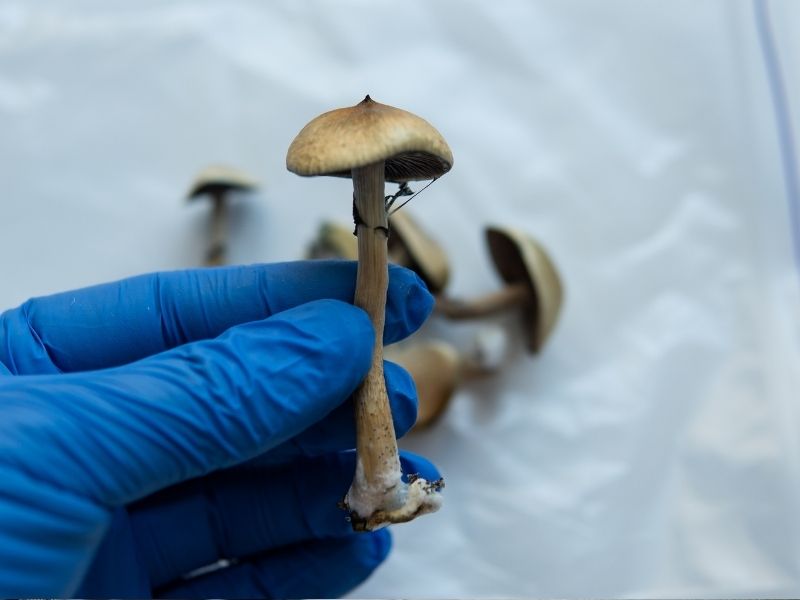
As we enter 2026, the landscape of legal psychedelics in the United States has become increasingly bifurcated in nature in terms of legal philosophies. Oregon and Colorado are the only two states with operationally established legal frameworks for psilocybin, yet they provide end users with vastly different end-user experiences. Thus, when looking for a beneficial environment to undertake psilocybin-assisted therapy, it is critical for a person to understand how these structural differences affect their respective therapies.
In contrast, while Oregon continues to develop and enhance its “service center” model, Colorado’s Natural Medicine Health Act has introduced a personal use component; as such, the legal stakes for residents and visitors are different.
The Oregon model: The regulated service center
Oregon remains the pioneer of the “facilitation-only” model. Under Measure 109, psilocybin is strictly controlled. It cannot be purchased for home use, and it cannot be shared outside of a licensed environment. In 2026, the Oregon Health Authority (OHA) maintains a closed-loop system where every step—cultivation, testing, and administration—happens under state oversight.
The Licensed Service Center is at the heart of the Oregon experience of providing scaffolding, which is strongly emphasized in the process of providing scaffolding by a licensed facilitator. In order to ensure that you have adequate preparation for your administration day, you are required to complete a preparation session with a licensed facilitator prior to the day of administration.
Your licensed facilitator should have successfully completed a minimum of 120 hours of training and passed a background check in accordance with the Oregon Administrative Rules. For professionals looking for an exceptional standard of safety and clinical support, Oregon has been and continues to be the leading provider of structured environments for scaffolding professionals.
Book a call with Omnia and learn more about this path.
The Colorado model: Natural medicine and personal use
In early 2026, significant changes were made to the regulations around Colorado’s Proposition 122.
Proposition 122 has a more expansive program than Oregon’s methodology. The Colorado option has two components: healing centers that are regulated (similar to Oregon) and an overall framework for natural medicines that allows for the personal use of psilocybin.
Individuals who are 21 years or older and who meet the requirements of Colorado law are permitted to grow, possess, and share psilocybin mushrooms for personal use without requiring a license in their home. Colorado’s model for healing centers is evolving to be similar to Oregon’s professional standards while providing for the safe use of both traditional ceremonial and indigenous community-based medicine. Users in Colorado are likely to encounter a wide variety of different approaches to obtaining assistance compared to Oregon due to the lack of established standards of practice.
You might be interested in: Why Oregon? Understanding the gold standard of regulated psilocybin therapy
Key differences in access and safety in 2026
The primary difference for a guest in 2026 is the level of “containment” and professional accountability. Below are the key distinctions:
- Retail vs. administration: Neither state allows “retail” sales like a cannabis dispensary. However, in Colorado, you can grow your own, whereas in Oregon, you must consume a lab-tested dose provided by a licensed manufacturer during your session at a center.
- Facilitator training: Oregon has the longest-running training requirements in the country. While Colorado has established its own licensing, the “personal use” and “community-sharing” aspects mean that many people in Colorado may be “sitting” for others without a state-verified license.
- Scope of substances: As of 2026, Oregon is focused exclusively on psilocybin. Colorado’s framework includes provisions for other natural medicines like DMT, ibogaine, and mescaline (not derived from peyote), though psilocybin remains the primary focus of their licensed centers.
- Liability and oversight: In Oregon, the service center and the facilitator are legally accountable for the safety of the session. In Colorado’s personal-use space, the user carries the full legal and psychological risk of the experience.
Why the Oregon path remains the clinical choice
For individuals dealing with chronic stress, “brain fog,” or complex emotional trauma, the lack of standardization in a “personal use” model can be a risk. Oregon’s model is designed specifically to mitigate the variables that lead to challenging experiences. By requiring lab-tested products and state-certified facilitators, Oregon ensures that the focus remains on cognitive recovery rather than just a “trip.”
Furthermore, Oregon’s integration requirements are more robust. Because the state views psilocybin as a therapeutic tool rather than just a personal right, the framework is built around the “afterglow” window. This is where the real work of neuroplasticity happens—translating the insights of the journey into lasting lifestyle changes.
Choosing the right environment for your recovery
If your goal is legal autonomy and the right to explore natural medicines in a private setting, Colorado’s model offers unparalleled freedom. However, if you are looking for a secure, professional, and medically-informed “container” for deep psychological work, Oregon’s Service Center model is the most established and safest path in 2026.
Choosing Oregon means choosing a system where your safety is a matter of state law. For those flying in from out of state, the peace of mind provided by a licensed Oregon facilitator is often the most important factor in allowing the brain to truly relax and begin the healing process.
Experience safe & supported psilocybin therapy. Consult Omnia Group today.